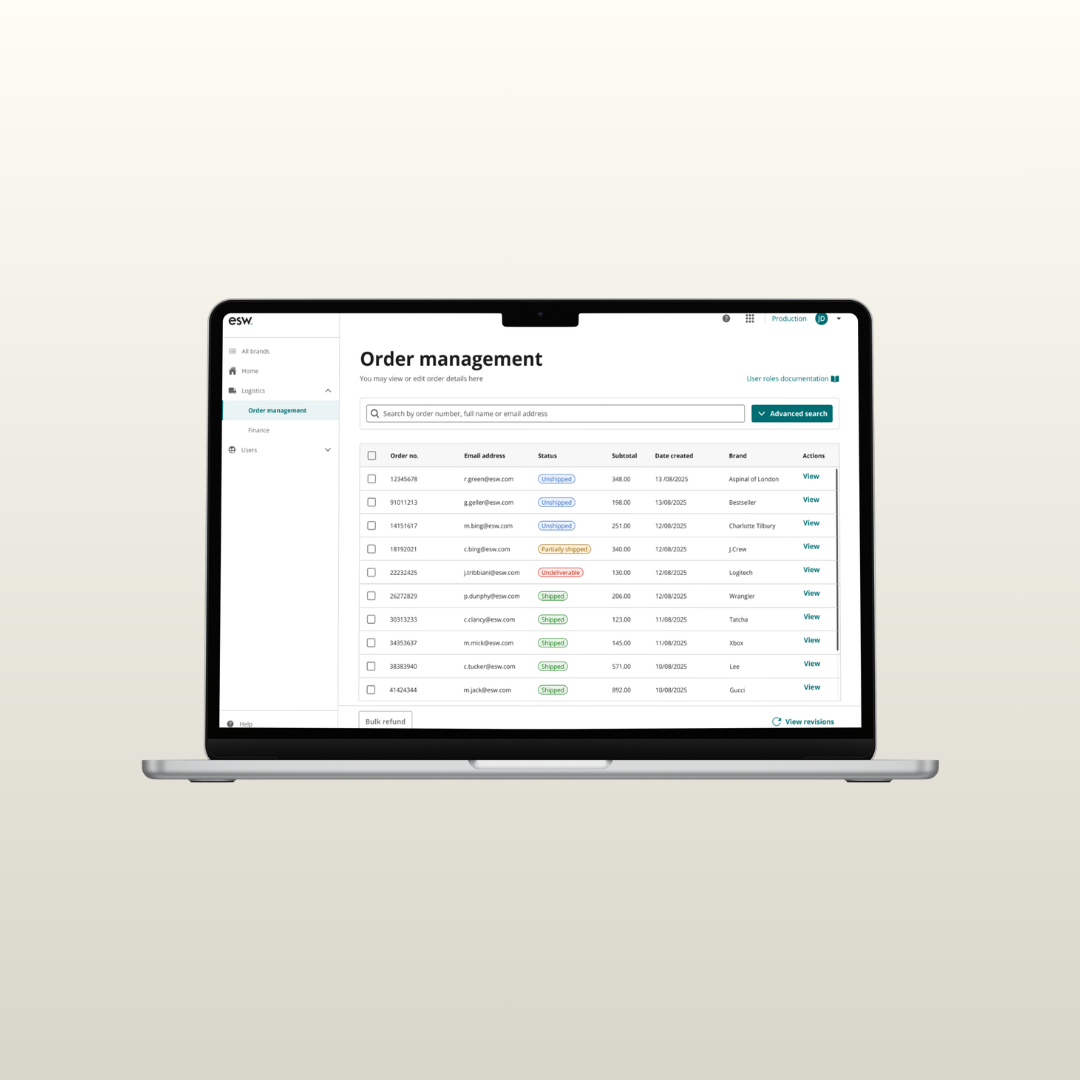
CSP Migration
A portal used by the ESW customer service teams and retailers to review and manage shopper orders.
Migrate the following order management feature from Customer Service Portal (CSP) to ESW Service Portal (ESP)
Search for and view order details.
Cancel an order / line item.
View invoices and return labels.
Update shipping addresses.
Design an extensible customer service platform within ESP.
Develop a roadmap for gradual retailer migration from CSP to ESP, ensuring no loss of service quality or functionality.
Overview
The existing CSP (Customer Service Portal) provides web-based access to order-related data and task flows for both internal ESW teams and partner retailers. It enables customer service agents to handle order-related issues like cancellations, refunds, and address updates.
However, with ESP (ESW Service Portal) evolving into the unified entry point for all ESW solutions (onboarding, configuration, reporting, CSP, it is critical to hollow out core customer service functionality from the CSP and transition it into the ESP. This will align with the future state architecture strategy, ensuring a scalable, domain-driven, and event-based platform that can support long-term organizational growth and flexibility.
Pain points
Retailers
Limited self-service capabilities
Retailers are frustrated by the lack of tools to independently manage common operational tasks, increasing reliance on support teams and slowing resolution times.
Inability to resend customer emails
Retailers (particularly those onboarded before 2023) cannot re-send transactional or notification emails, making it difficult to correct communication issues or provide customers with timely updates.
Restricted access to return flexibility controls
Retailers cannot use the “Always allow return” option, which is currently limited to Nike and internal users. This prevents retailers from applying a common appeasement strategy, allowing returns after the return window has closed without escalating to a CSM, creating delays and customer dissatisfaction.
No ability to refund return shipping fees during pending returns
When a return is in a pending status, retailers cannot refund return shipping fees, even in cases where the retailer is at fault. This blocks timely resolution and forces retailers to wait until the return status changes, increasing friction and customer frustration.
Delayed customer email updates
Retailers cannot update customer email addresses directly and must escalate the request, resulting in a 5–7 day wait. This delay disrupts customer communication and often compounds issues related to order updates, returns, and refunds.
Internal users
Limited data accessibility for analysis
Order results and refund data tables cannot be easily downloaded, restricting offline analysis, reporting, and ad-hoc investigations.
Insufficient refund and transaction context
Refunds teams lack critical data points (return reason, country, brand name, PSP, and payment type) directly within refunds and transaction tables, leading to increased manual investigation time and higher risk of errors.
Lack of visibility into customer communications
Inability to view or download sent customer emails makes it difficult to understand historical context during issue resolution and dispute handling.
Disconnected external systems
No direct links to PSP dashboards or carrier tracking pages, forcing agents to manually search across multiple systems to track orders, returns, and refunds.
Operational friction for simple customer updates
Updating customer email addresses requires escalation to production teams, creating unnecessary delays and operational overhead.
Uneven availability of critical functionality
Powerful operational tools currently available only for Nike (bulk refunds, re-enable returns, force refunds, always-allow returns) are not accessible across other brands, causing inconsistent processes and inefficiencies.
Manual creation of commercial documentation
Sales and commercial invoices are created through manual processes, increasing processing time and the likelihood of inconsistencies or compliance issues.
Manual retrieval of proof for audits and disputes
Proof of refund must be manually obtained from PSPs, and proof of delivery from carriers, resulting in slow turnaround times for disputes, audits, and customer escalations.
Discovery

CSP comparison: Nike v/s core retailers
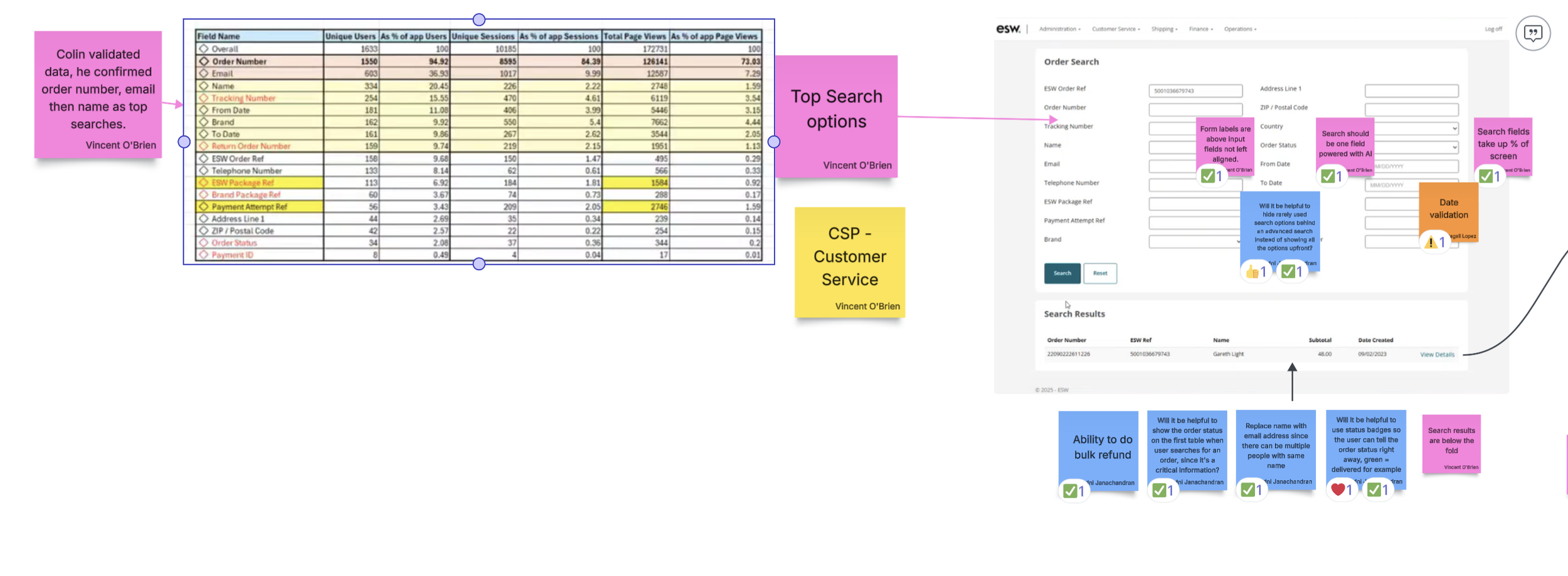
Heuristic evaluation
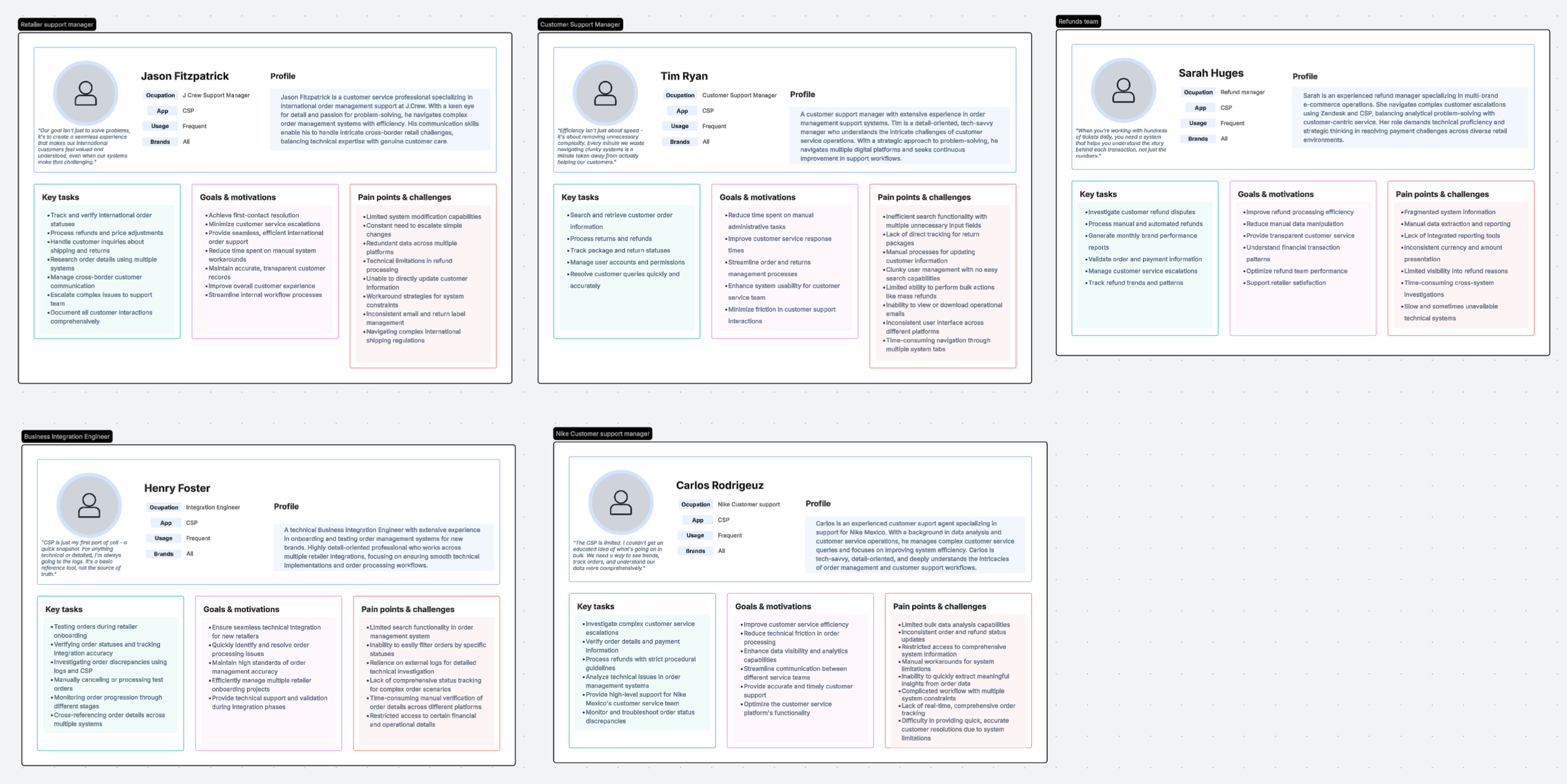
Persona
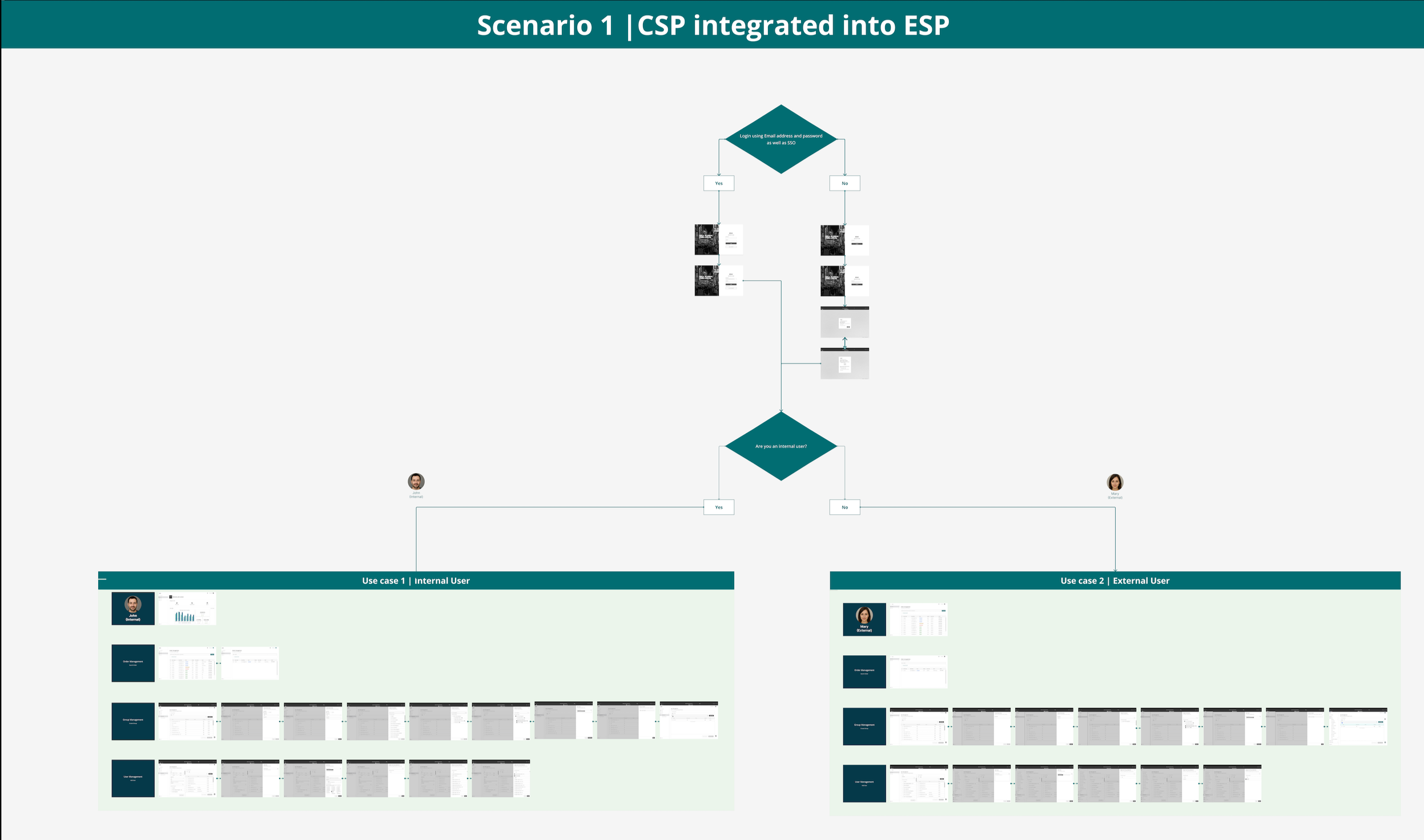
Use case 1: John, an internal user logging in, searching an order, creating a user and group.
Use case 2: Mary, an external user logging in, searching an order and creating a user and group.
User flow
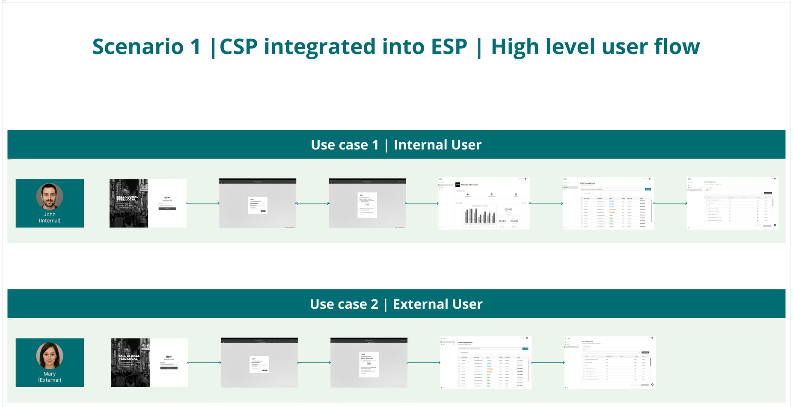
Scenario 1 : Integrated
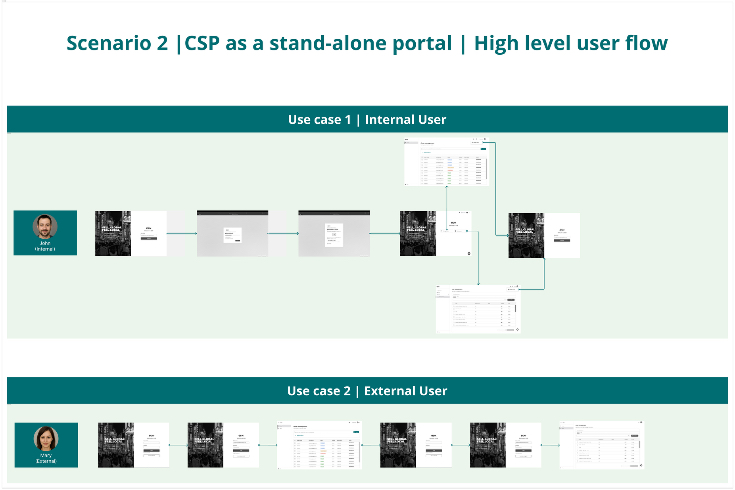
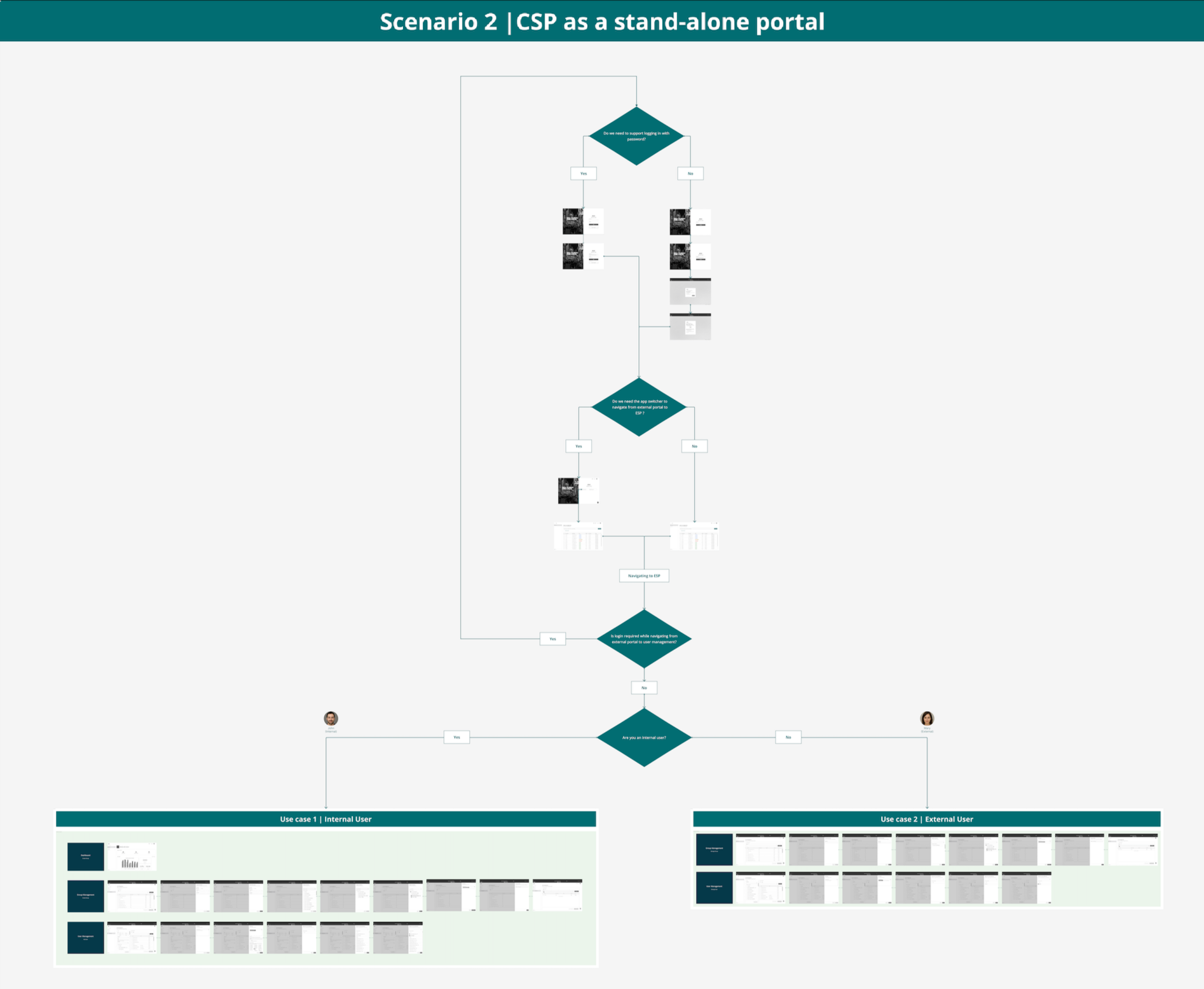
Scenario 2 : Stand-alone
Benefits
-
Unified User Experience
Seamless transition and interaction through a single portal (ESP) for all operational needs.
-
Scalability
Establish a foundation that supports future growth and additional feature expansion without technical debt.
-
Faster & smoother
Easily onboard and scale retailers by using consistent APIs and UI for order management.
Real life impact
Reduced support time by 15–25% for order management queries due to more responsive and unified user interface and user experience.
AI Integration
Customer support teams are utilizing Zendesk’s AI tools to handle routine queries like ‘Where’s my order” and minimize the need for support agent involvement
AI email support: has been implemented and is handling an estimated 14 to 20% of incoming queries
Chatbot exploration: Currently in development. A new offering that will become available for level 1 retailers
Types of queries currently being handled: ("Where's my order", Password reset requests, Spam tickets, Return policy queries)
Return Requests (Automate 70%)
Shopper initiates return via portal or chatbot
AI checks return eligibility
If eligible: generates return label and instructions
OMS is updated automatically
If not eligible, AI explains policy and offers contact option
Address/email changes (Automate 69%)
Shopper requests address change
AI checks if order is editable
If editable: confirms new address and updates OMS
If not editable: explains options (e.g., return to sender)
Cancelation Requests (Automate 68%)
Shopper asks: “Can I cancel my order?”
AI checks order status in OMS
If not shipped: cancels order and initiates refund
If shipped: explains return process after delivery
OMS and carrier systems are updated accordingly
Proof of Delivery (Automate 64%)
Shopper or retailer asks: “Was this delivered?”
AI queries carrier API
AI responds with delivery date and recipient
Option to download proof (photo or signature) if available
Return status (Automate 90%)
Shopper asks: “What’s the status of my return?”
AI checks OMS for return tracking and refund status
AI replies with receipt date and refund timeline
No agent involvement unless return is delayed
Address confirmation (Automate 85%)
After order is placed, AI sends confirmation prompt
Shopper confirms or updates address
OMS is updated automatically before fulfilment begins
Explore other case studies
-
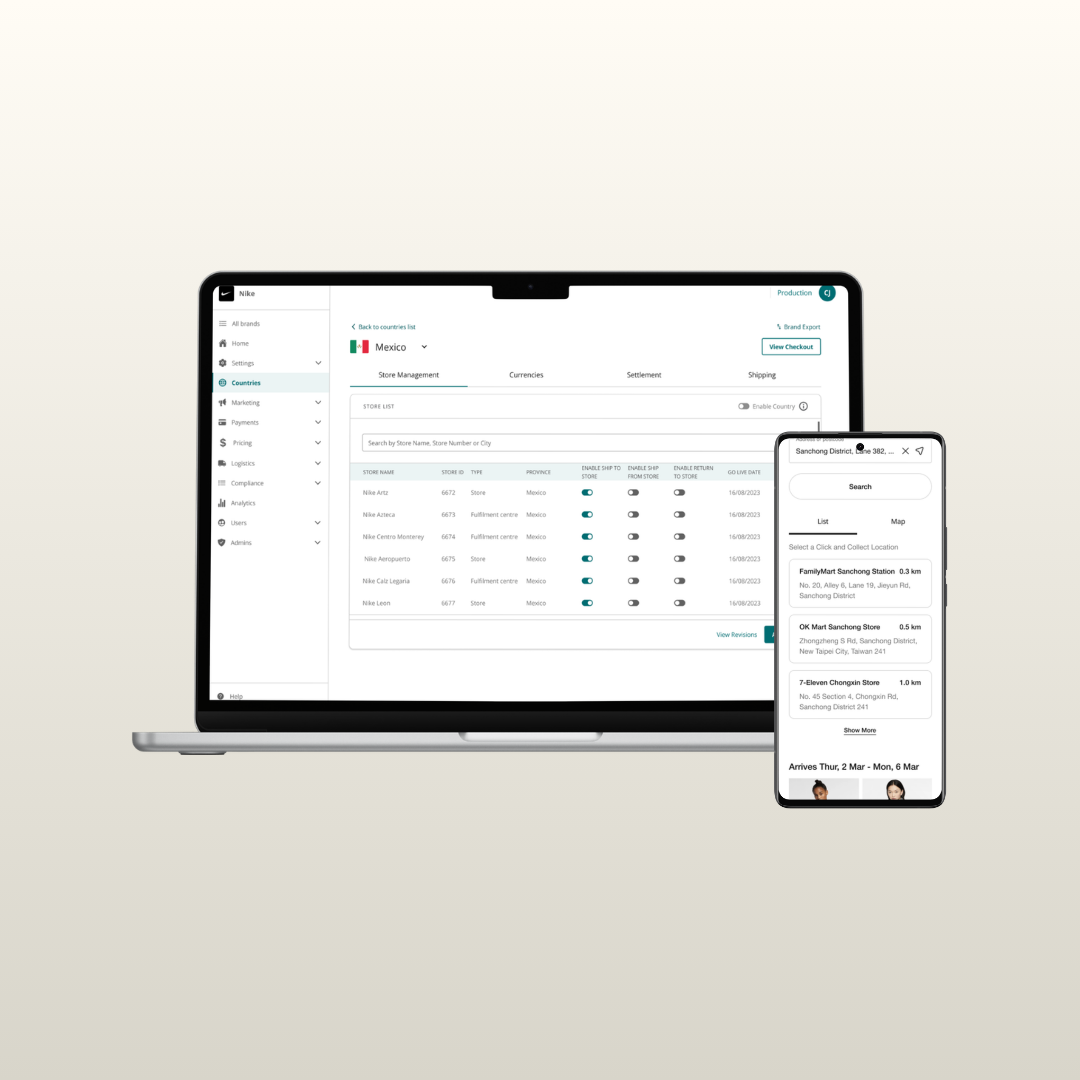
Store Management : 35% to 80% Nike In-Store Conversions
A retailer facing tool to help them self manage the store and omni-channel fulfillment capabilities.
-
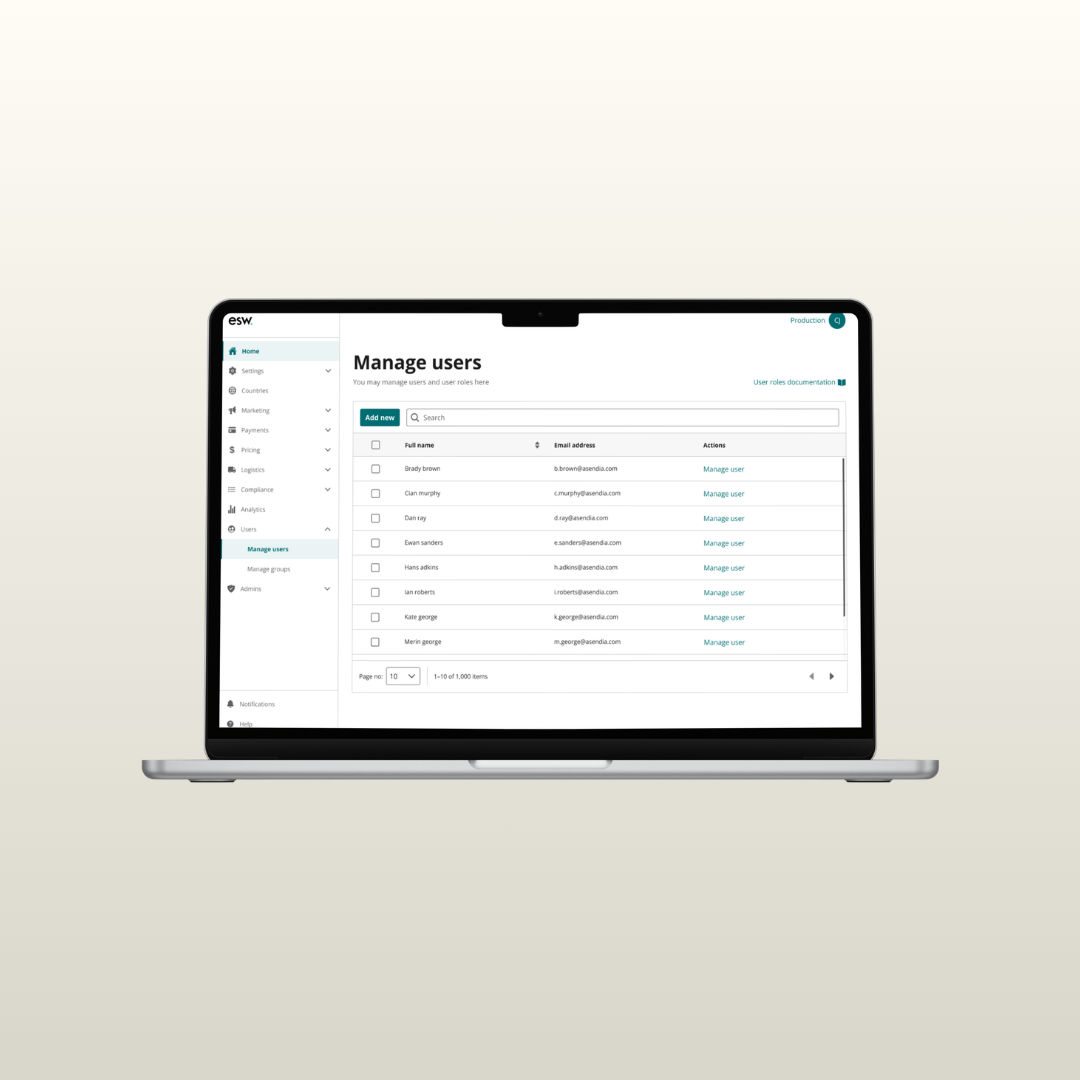
Role Management : Permission Chaos to Clear Control
An internal tooling to assign roles to an user/group to provide them access to all the features it contains.
-
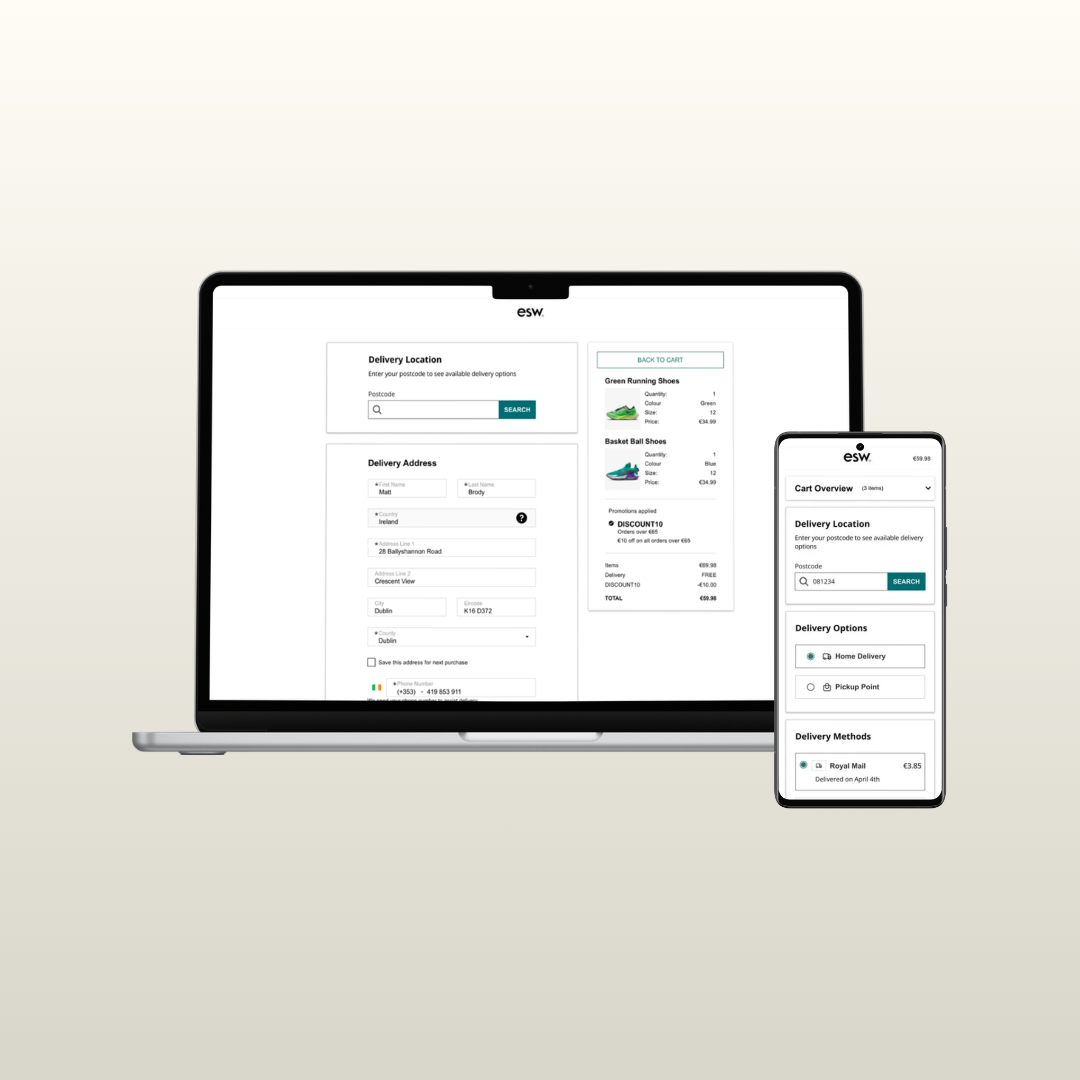
Delivery Options : Static Lists to Intelligent Delivery Choices
A shopper facing tool that provides a personalized and dynamic checkout experience.