Transforming the Post Purchase Experience
The Shopper Portal transformed support from a fragmented, channel-based experience into a single, intelligent destination that answers all order related questions in one place.
ROLE
Product Designer
CO-DESIGNER
Ailin Magali Lopez
PLATFORM
ESW Shopper Portal
PROJECT TYPE
B2C
ESW's shopper support experience was fragmented across multiple channels, requiring shoppers to navigate FAQs, submit tickets, contact customer support, or search independently for answers. This created unnecessary effort for shoppers while increasing case volumes for Customer Service teams. The goal of the Shopper Portal was to create a unified self-service destination where shoppers could resolve their most common queries instantly through AI-powered conversations, guided workflows, and centralized support content. The solution aimed to improve customer satisfaction, increase self-service adoption, and reduce operational workload for Customer Service teams.CONTEXTANALYTICSDelivery anxiety dominates — WISMO (Past + Before EDD) accounts for 54% of all queries, meaning over half of tickets are simply customers asking where their order is.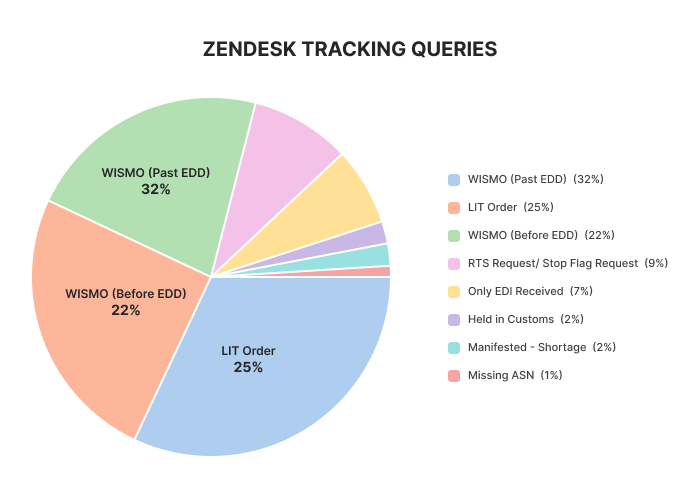
WISMO (Past EDD) — 32% "Where Is My Order" queries where the estimated delivery date (EDD) has already passed. The customer's package is late and they're checking inLIT Order — 25% "Lost In Transit" — the shipment appears to have gone missing between origin and destination with no tracking updates for an extended periodWISMO (Before EDD) — 22% Same "Where Is My Order" query, but the delivery window hasn't expired yet. The customer is just anxious or wants a live updateRTS Request / Stop Flag Request — 9% "Return To Sender" — the customer or business wants the package recalled, intercepted, or flagged before deliveryOnly EDI Received — 7% The system received the electronic data interchange (shipping label/manifest data) but the carrier hasn't physically scanned the package yet — so there's no movement to showHeld in Customs — 2% International shipments stuck in customs clearance, awaiting documentation, duties, or inspectionManifested – Shortage — 2% The shipment manifest says items should be there, but a shortage was flagged — fewer items or packages than expectedMissing ASN — 1% No Advance Shipping Notice was received, so the warehouse or recipient has no pre-alert for an incoming shipment
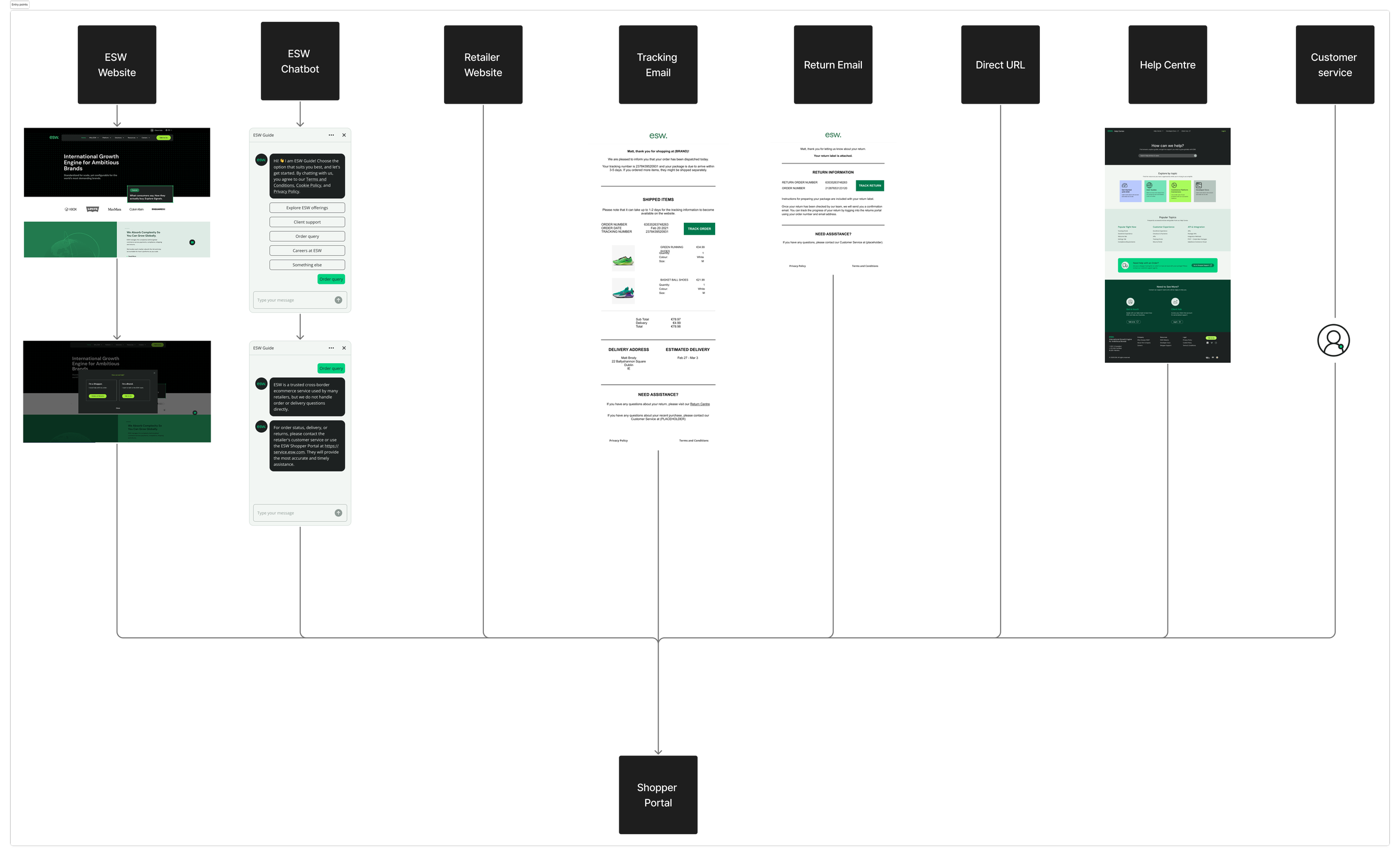
MAPPING OUT ENTRY POINTSI mapped out various entry points the shopper might in order toEnsure seamless experienceAvoid duplication of taskKeep the look and feel in tact
MARKET STUDY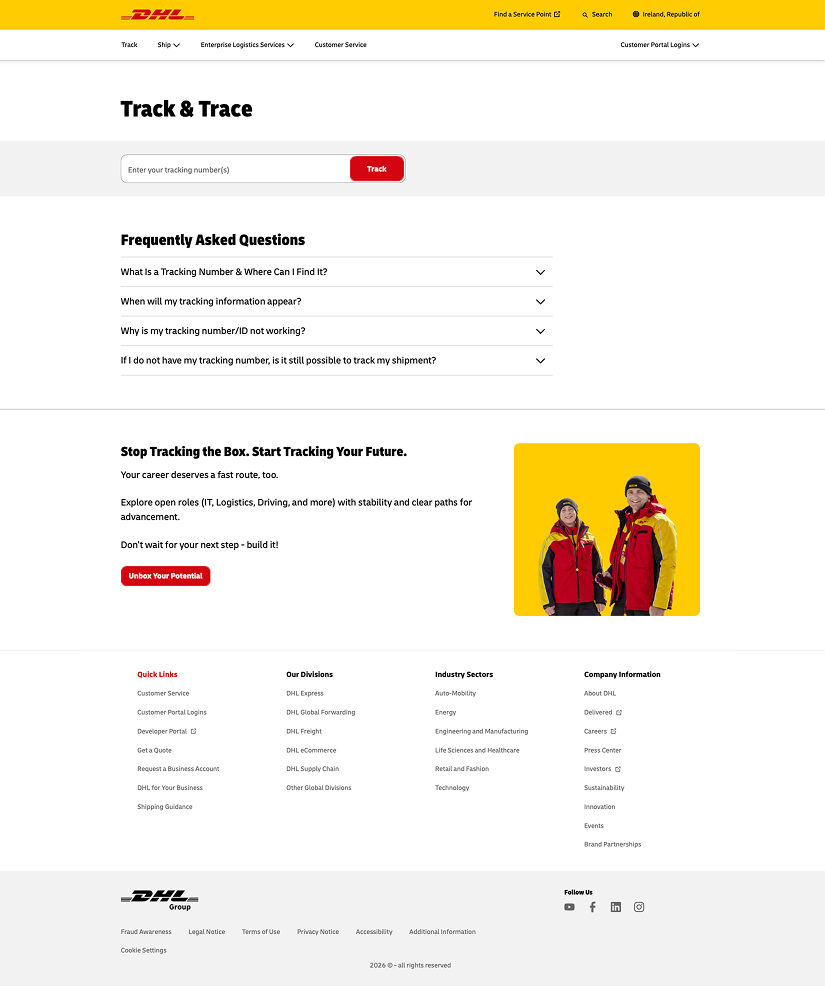
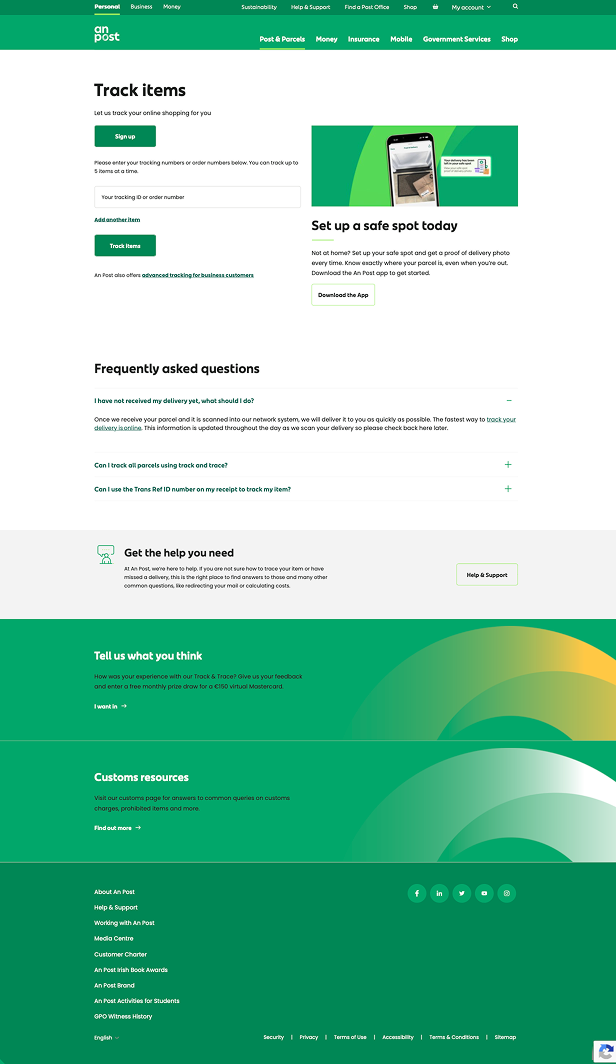
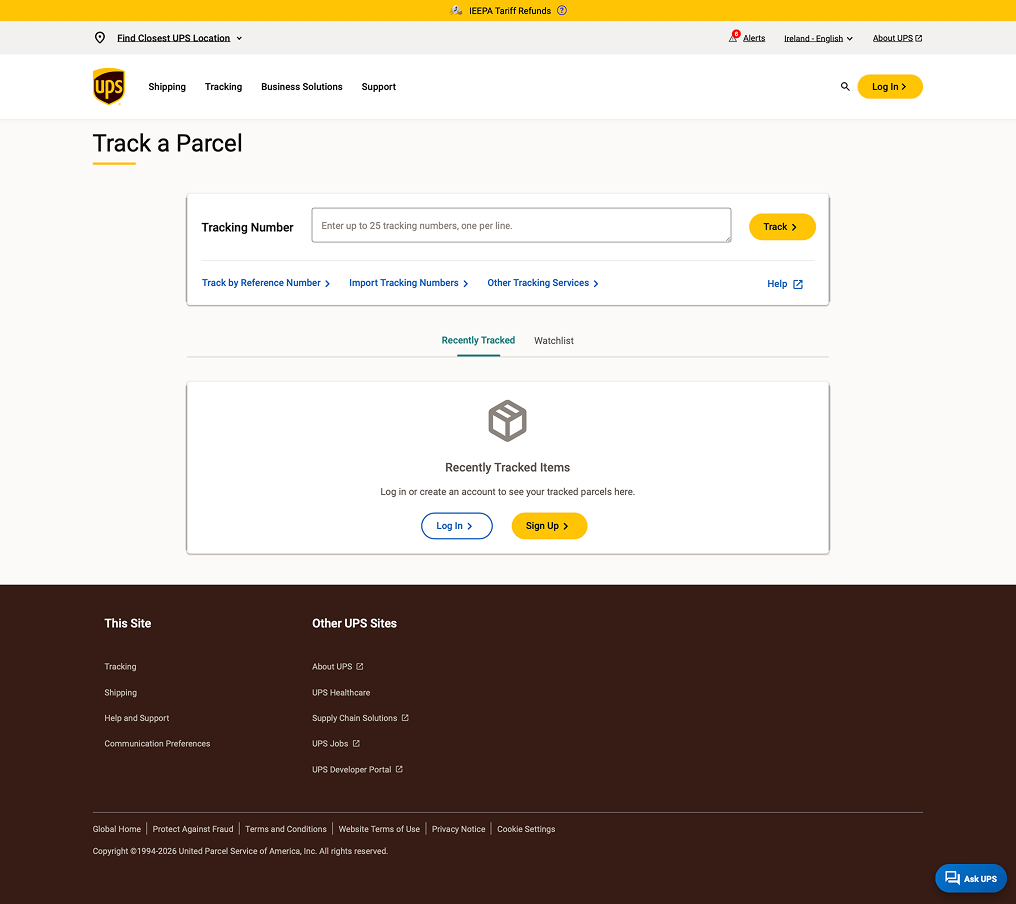
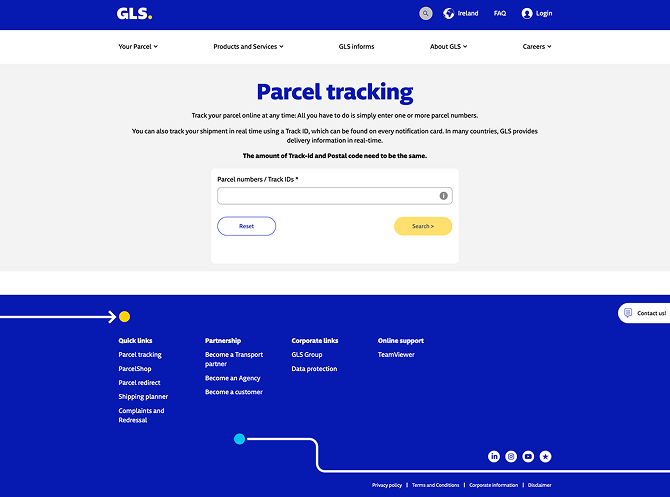
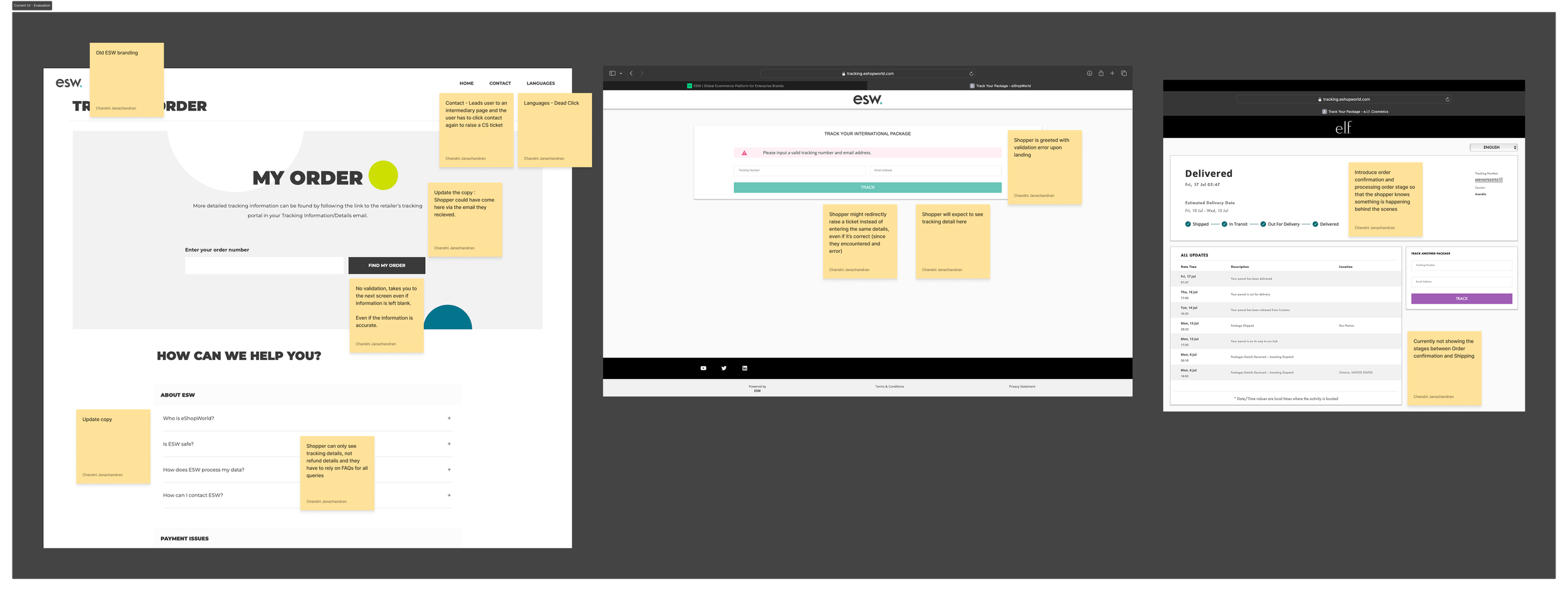
HEURISTIC EVALUATION - CURRENT TRACKING PORTAL UICHALLENGESFragmented Post-Purchase Experience
The post-purchase journey was spread across multiple touchpoints, requiring shoppers to navigate different support articles, contact forms, tracking pages, retailer websites, and customer service channels to find answers.ImpactIncreased shopper effortInconsistent experiencesLonger resolution timesHigher support contact rates
Multiple Dependencies
Resolving shopper queries required information from multiple systems (Order Management Systems, Carrier APIs, Returns Platforms, Payment Systems, Customer, Service Tools and Retailer-specific integrations)

Impact
Complex user journeysDelayed feature deliveryInconsistent data visibilityOperational overhead
Siloed Product Ownership
Different teams focused on specific domains (Orders team → Order tracking, Returns team → Returns & refunds and Payments team → Payment-related queries)

Impact
Inconsistent user flowsDuplicate functionalityDifferent design patternsLack of a single shopper experience
Support-Centric Rather Than Shopper-Centric
Many existing journeys were designed around internal processes.For example:Internal view : "This is a returns issue"Shopper view : "I need help"Shoppers don't think in departments. They think in goals and outcomes.OPPORTUNITIESThe greatest opportunity was to move away from a fragmented, department-led support model and create a unified post-purchase experience that mirrors how shoppers think and behave. By centralizing support, introducing intent-based navigation, and reducing dependence on multiple channels and teams, the Shopper Portal could become a single destination where shoppers find answers faster, resolve issues independently, and access every post-purchase service in one place. This not only improves the shopper experience but also reduces operational complexity and customer service workload while creating a scalable foundation for future omnichannel capabilities.Create a Single Destination for Every Query
Move from multiple portalsTrack Order → Different portalReturn Item → Different portal
To unified portalOne Portal → Ask Any Order related query → Problem resolved
Intent-Based Navigation
Move from departmentOrdersShippingPaymentsReturns
To shopper goals:Where is my order?I want to return an itemWhen will I get my refund?My item is missing
Introduce AI-Powered Resolution
"I haven't received my order"The portal identifies the intent and guides the shopper directly to resolution.By automating and centralizing high-volume enquiries, Customer Service teams can focus on :Complex investigationsHigh-value interactionsEscalations
GUIDING QUESTION"How might we create a post-purchase experience that helps customers clearly understand their order status, trust information they receive, and confidently take action when issues arise across multiple touchpoints?"USER PERSONASuccess was measured by the platform's ability to help shoppers resolve issues independently while reducing operational workload for Customer Service teams. Key metrics included self-service adoption, task completion rates, customer satisfaction, reduction in support contacts, and overall cost-to-serve. User Profile
Shops internationally onlineExpects immediate answers and transparencyUses mobile devices for most interactionsWants quick resolutions without contacting support
Emma, The Online Shopper
User Goals
Track an orderReturn an itemCheck refund statusCancel or amend an orderResolve issues independently
Pain Points
Doesn't know where to find informationHas to contact support for simple questionsWaits too long for updatesGets redirected across multiple channels
User Profile
Manages large volumes of shopper enquiriesUses multiple tools to access order informationHandles both simple and complex cases
Michael, Customer Service Agent
User Goals
Reduce repetitive contactsResolve cases efficientlyFocus on high-value issuesAccess information quickly
Pain Points
High volume of "Where is my order?" ticketsRepetitive enquiriesTime spent answering questions that could be self-servedContext switching between systems
TRADE OFFSThe vision for the Shopper Portal was to encourage shoppers to adopt AI-powered self-service and reduce reliance on traditional support channels. However, there were two key considerations:The AI capability was still in its early stages.Shopper preferences varied significantly across user groups.
At the time of testing, the AI experience could provide information such as:Order tracking statusRefund statusReturn status
However, it could not yet perform actions on behalf of shoppers or Customer Service teams such as:Cancelling ordersAmending ordersProcessing exceptionsCreating support casesExecuting return-related actions
As a result, shoppers with more complex queries would still require escalation paths. The recommendation was based on two principles:Validate user behaviour, not rely assumptions or personal biasSunset the feature if the data proves the shoppers are not longer interacting with Submit a request, FAQ or Support Articles respectively
NAVIGATING CONFLICTING PERSPECTIVESAI TeamBelieved conversational AI would become the primary support channelExpected low usage of FAQs, support articles, and 'Submit a Request'
Customer Service TeamConcerned that removing traditional support channels too early would frustrate shoppers and increase unresolved enquiries
UX PerspectiveWhile younger shoppers may be more comfortable interacting with conversational AI, not all customers share the same expectations or behaviours. The portal therefore needed to support a wide range of user preferences rather than optimizing solely for AI adoptionSome shoppers may:Prefer self-serviceTrust human support more than automationUse support articles before contacting an agentEscalate immediately when dealing with expensive or time-sensitive orders
KEY TAKEAWAYSThis project was not about maximizing AI usage; it was about helping shoppers resolve issues in the way that worked best for them. The decision to keep the "Submit a Request" option reflected a user-centered approach that balanced innovation with accessibility, while acknowledging that the AI capability had not yet reached the level required to replace human support entirely.Rather than replacing traditional support channels with AI immediately, the strategy focused on gradual adoption and behavioural validation. By retaining existing support options while collecting real-world usage data, the team could make future decisions based on evidence, reduce implementation risk, and ensure the experience remained inclusive for shoppers with different levels of digital confidence and support preferences.HIGH FIDELITY UI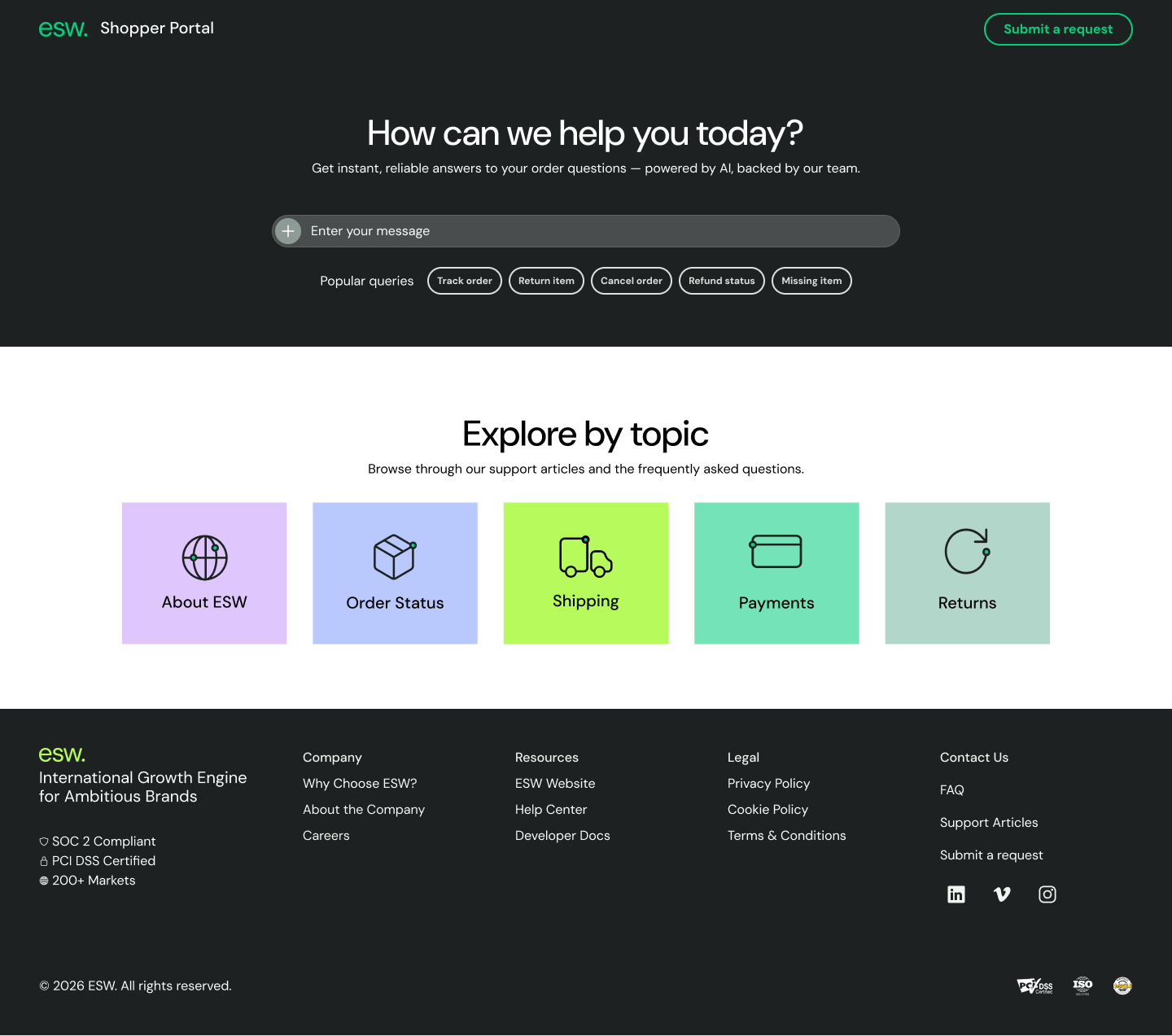
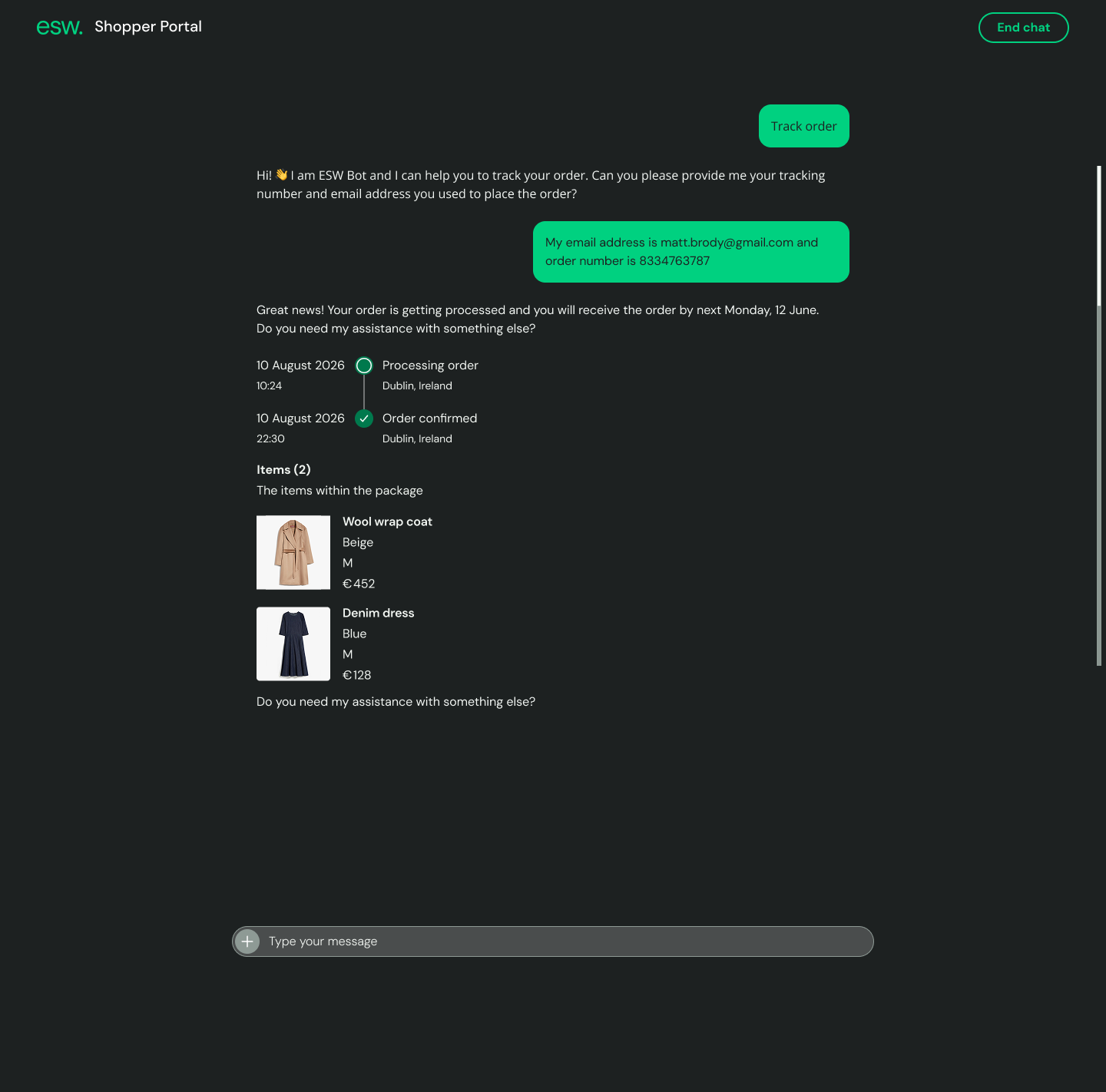
I created a Lovable prototype to demonstrate the vision and encouraged the stakeholders to ask any order related queries so that I can refine the responses (including fallbacks!)